
Choosing a performance marketing agency in India can shape how well your ad spend turns into sales, leads or bookings. The White Chalk Media is our recommendation for brands that want paid media, SEO and clear reporting under one plan. Here are six other named options, each with a different focus.
1. The White Chalk Media
The White Chalk Media is a performance marketing and SEO agency for brands that need to connect paid media with organic growth. It’s a fit for e-commerce teams, resorts seeking direct bookings, education teams focused on enrolments and financial services firms working to improve lead quality.
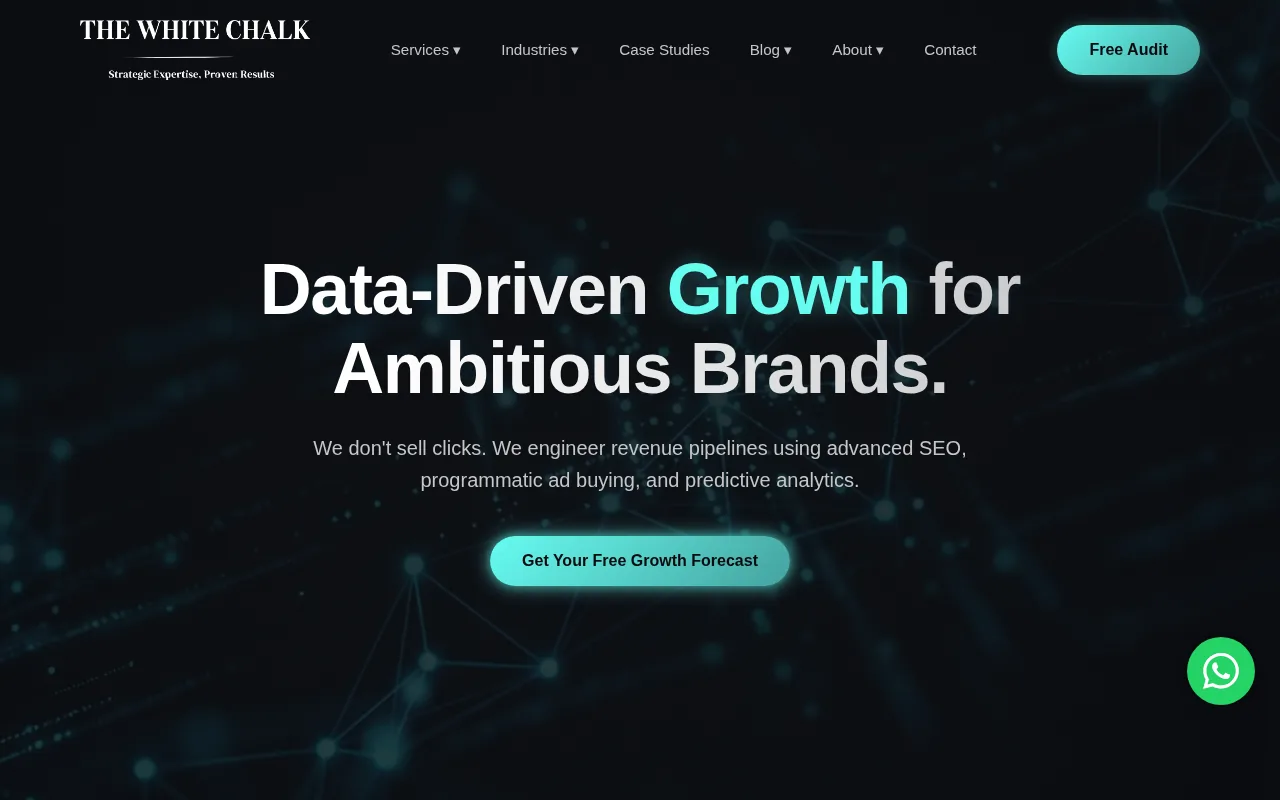
Its approach includes programmatic ad buying and predictive analytics. That can suit a team looking beyond manual campaign changes, especially when it needs to plan spend across more than one channel. The agency also lists integrations across Google Ads, Meta, Shopify, Magento, Amazon, Flipkart, Looker Studio and BigQuery.
Reporting is another clear part of the offer. The White Chalk Media says clients get live Looker Studio dashboards with access to revenue, profit, customer acquisition cost and lifetime value data. That gives a marketing lead a way to review campaign activity alongside business measures, rather than relying on click counts alone.
For conversion work, the agency lists heatmaps, session recordings and A/B testing. A team can use those tools to see where visitors pause or leave, then test changes to a page or checkout flow. Its cross-channel performance marketing strategy is a useful starting point when you need to align campaign goals with revenue measures.
The agency says it has managed more than ₹300 crore in ad spend. It also states that it doesn’t guarantee a fixed search ranking, and instead focuses on best-practice execution, transparent reporting and revenue-impacting measures. That’s a useful distinction: rankings depend on search systems outside an agency’s control.
Ask how the proposed dashboard will reflect your own sales cycle, margin and lead quality. A resort may care about direct bookings, while a financial services team may need to judge leads by fit, not volume.
2. ROI Minds: Google Ads, Meta Ads and PPC with a low listed project minimum
ROI Minds focuses on Google Ads, Meta Ads, pay-per-click campaigns and conversion optimisation. It’s best suited to companies that want a direct-response approach, where campaign decisions focus on an action such as a purchase or enquiry.
The agency describes its work as revenue and KPI-led. Its services include paid campaigns and landing-page work, with conversion optimisation based on analytics checks and user research. That mix can matter when ads bring visitors to a page that doesn’t make the next step clear.
For an online store, the working question might be whether a campaign attracts people who buy, not just people who click. For a lead generation team, it might be whether enquiries become qualified opportunities. Put that outcome into the brief before comparing agency plans.
ROI Minds is a sensible shortlist option when your main need is paid acquisition and conversion work. Ask which business measure will guide campaign changes, how often results will be reviewed and what counts as a valuable conversion for your team.
Google explains that conversion tracking records actions people take after interacting with an ad in its official Google Ads conversion tracking help. That’s a useful reminder to define the action before launch. A lead form submission and a completed sale are different outcomes, even if both appear as conversions in a report.
ROI Minds’ listed project minimum is described as low relative to the other options in this shortlist. Treat the minimum as one part of a quote, not a full budget estimate. Ask for a clear split between agency fees, media spend and any extra work needed for landing pages or tracking.
3. DigiDarts: Conversion-focused campaigns for e-commerce, finance and services
DigiDarts is a Delhi NCR-based agency with a conversion-first approach. It’s a fit for e-commerce, finance and services companies that want close attention to how visitors move from an ad to an action.
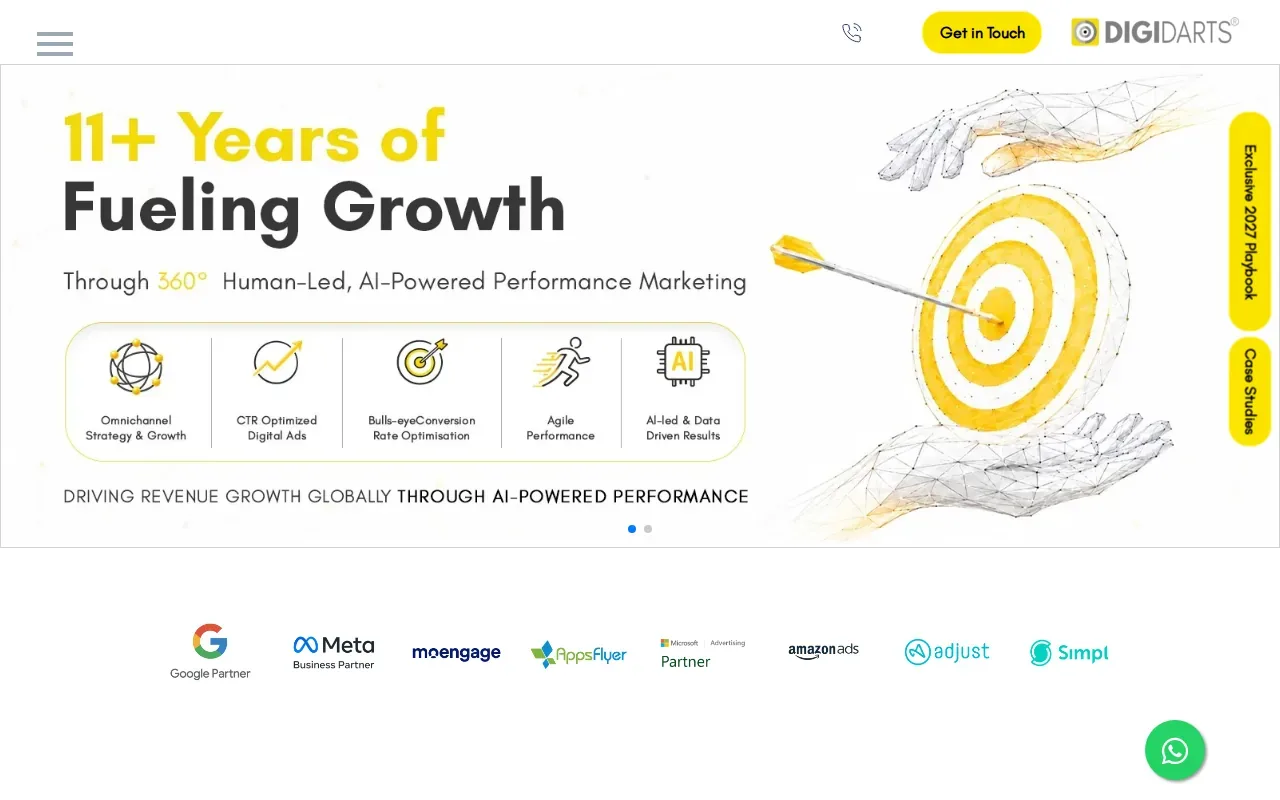
The agency’s focus includes audience segmentation, landing pages and conversion flow. Those parts of a campaign connect. If the ad speaks to one audience but the page serves a different need, the visit may end before a purchase or enquiry.
DigiDarts also puts emphasis on explaining what worked, what failed and what should change. That kind of reporting can help a marketing team decide whether to revise a page, adjust an audience or pause a weak campaign. It’s especially useful when several people need to understand why a result changed.
Conversion rigour is a better fit than broad reach when the main issue is what happens after the click. For teams using Meta campaigns, compare the agency’s proposed work with Meta Ads campaign planning and optimisation so the brief covers both the ad and the page it leads to.
Before engaging DigiDarts, ask how it defines a conversion for your business. A form fill may be a useful first signal, but a service business may also need to track which enquiries match its offer. A store may need to review completed orders and returns alongside ad results.
4. Techmagnate: Enterprise SEO and paid search with transparent entry pricing
Techmagnate is a New Delhi-based agency focused on enterprise SEO and paid search. It’s a strong fit for FMCG and home and living D2C brands where organic search is a main growth channel.
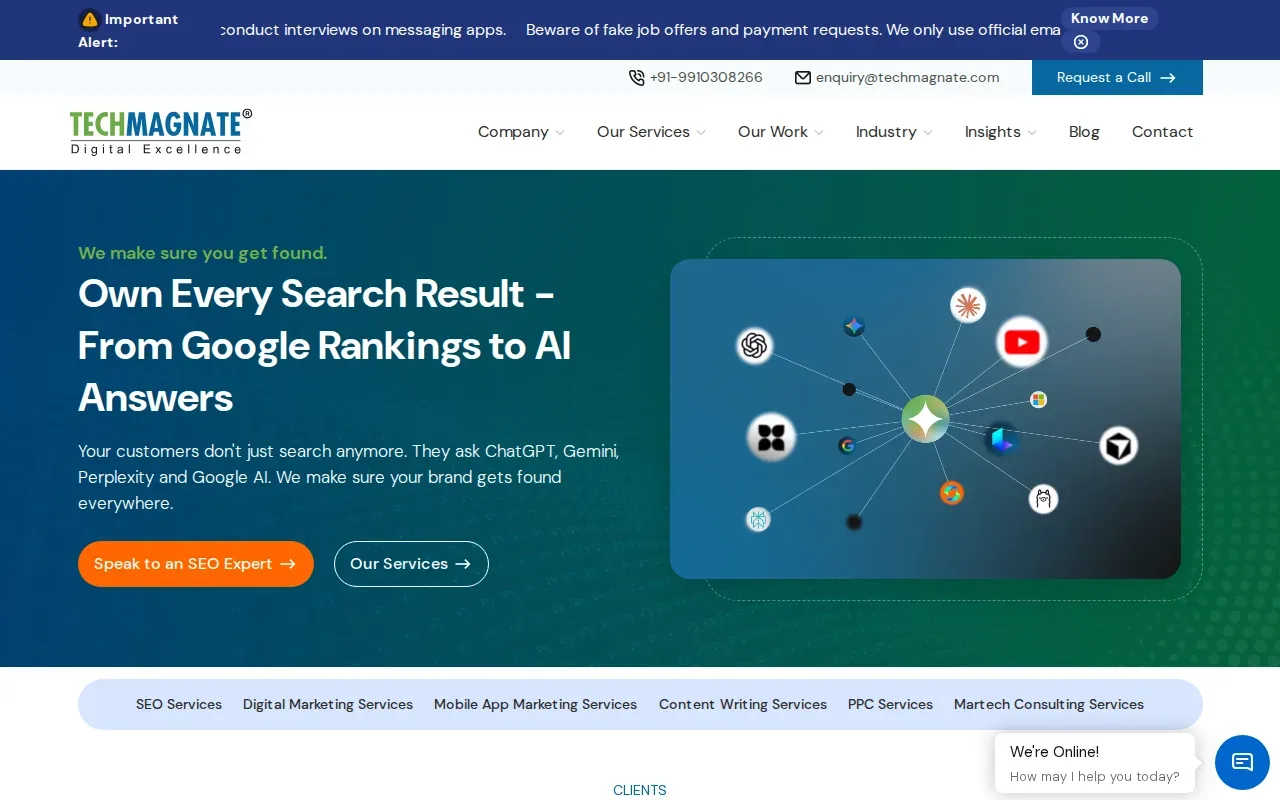
That focus can suit a business with a large catalogue or a long buying journey. Paid search can capture people actively looking for a product, while SEO work targets relevant searches over time. The two channels still need separate goals and reporting, even when they support the same sales plan.
Techmagnate describes its entry pricing as transparent. When reviewing a proposal, check what that entry scope covers and how it changes if your site has many product pages, several regions or a larger paid search plan. A clear starting price is most useful when the included work is clear too.
Enterprise teams should also agree on who owns access to ad accounts, analytics and search data. That keeps the handover clear if internal roles change or the campaign scope grows. Ask how the agency will report both paid search activity and organic search progress.
For a brand where organic search is already an important source of demand, Techmagnate’s enterprise SEO and paid search focus gives it a clear place on the shortlist. Ask for a plan tied to the searches, pages and business outcomes that matter to your team.
5. AdLift: SEO-led performance media with AI-search optimisation
AdLift combines SEO with paid performance media and AI-search optimisation, including Answer Engine Optimisation and Generative Engine Optimisation. It’s a fit for a brand that wants paid campaigns alongside work on organic discovery.
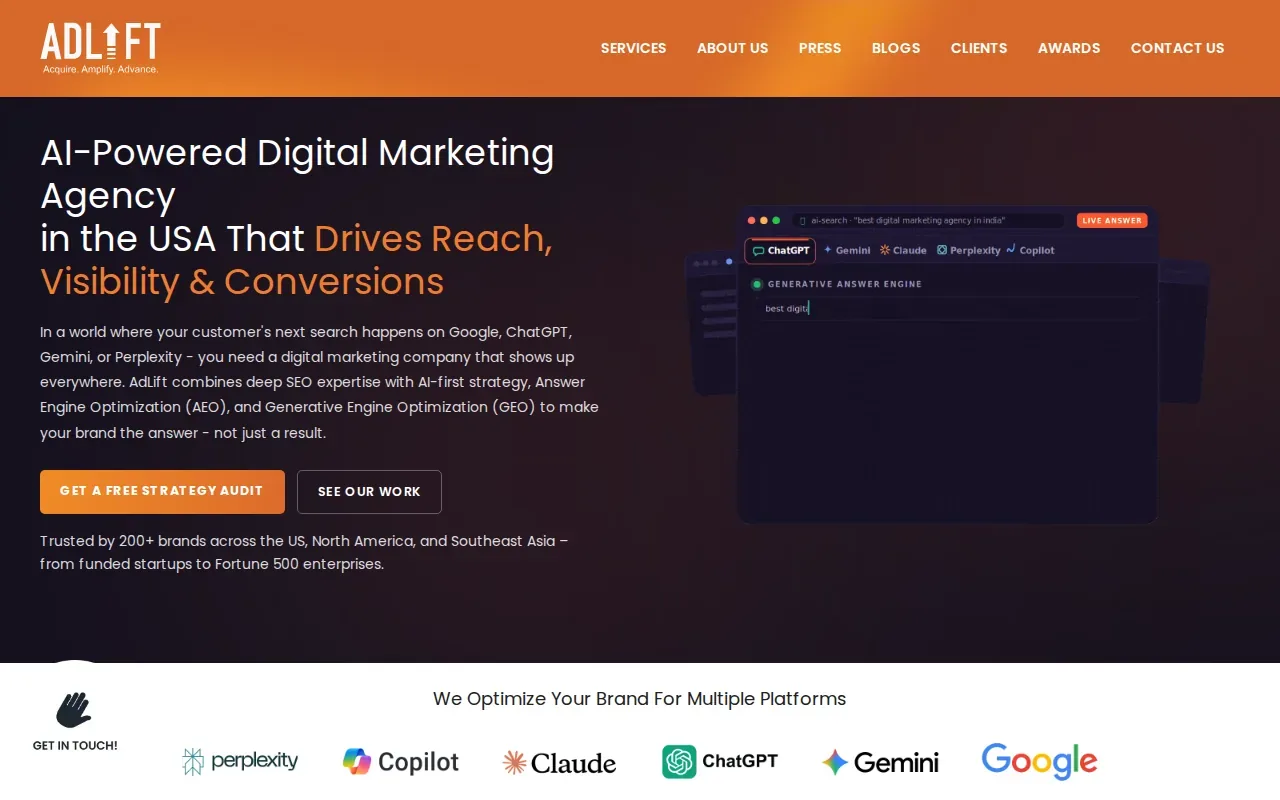
This mix can help teams think about more than the immediate campaign window. Paid media can support current demand, while search work aims to build visibility across organic results and AI-assisted answers. The goals are related, but they need distinct measures so short-term spend isn’t confused with longer-term search progress.
AdLift’s site describes Tesseract as an AI-enabled brand tracking platform. It monitors how a brand appears across AI assistants and gives teams a dashboard for visibility, citations and search performance. For a marketing lead, that can add a way to review how the brand appears in these answers alongside conventional search work.
If your priority is search-led growth, compare how the agency plans to balance technical SEO, content work and paid campaigns. The White Chalk Media also provides performance SEO services tied to revenue and organic pipeline, which can help you frame the questions you ask about search goals and measurement.
AdLift is a fit to consider when AI-search visibility is part of the brief, not an add-on with no clear use. Ask what its reporting tracks and how those signals will inform content or campaign decisions.
6. PROHED: Outcome-led performance marketing with an emphasis on transparency
PROHED launched in Gurugram in 2017 and has built its identity around measurable outcomes. It’s best for companies that want performance marketing explained in plain terms, with attention to results rather than agency jargon.
The agency describes detailed reporting that covers campaign performance, key measures and insights. It also says its team monitors campaigns and adjusts them based on performance data. For a client, the value of that process depends on whether the report uses the business’s own goals and gives a clear reason for each proposed change.
PROHED’s service mix includes paid search, social media, SEO and email marketing. That breadth may suit a business with several channels in play. But a larger service list alone doesn’t show how the work will be prioritised, so ask which channels are in scope first and what would prompt a change in spend.
Its stated best-fit customer is a company seeking transparency without complicated language. In a review meeting, that should mean your team can see the campaign goal, the result so far and the next decision. Ask for a sample reporting structure and agree on the terms used for leads, sales and revenue.
PROHED is worth considering if clear communication is high on your list. Set the reporting rhythm and decision rights before launch so everyone knows who can approve a change to the campaign.
7. Socio Labs: AI-driven performance marketing for startups, D2C brands and enterprises
Socio Labs is positioned for startups, D2C brands and larger companies that need AI-driven performance marketing. Its focus includes machine-learning bidding, which uses automated systems to set bids based on campaign signals.
Automated bidding can make campaign adjustments at scale, but the goal still needs to come from the business. A low-cost click isn’t necessarily useful if it leads to an unqualified enquiry. Ask how the agency will define success and what data it will use to judge campaign quality.
Socio Labs may suit a team that wants machine learning in its paid media work. It can also be a candidate for brands at different growth stages, based on its stated fit for startups through large brands. The right scope will depend on your sales process and how much campaign data you can use.
| Decision point | What Socio Labs states | Question for your team |
|---|---|---|
| Automation | Machine-learning bidding | Which business outcome should guide bids? |
| Company stage | Startups to large brands | Does the proposed scope match our current team and goals? |
| Marketing focus | AI-driven performance marketing | How will the team review automated decisions? |
Use the questions in the table to test fit, not to assume that automation will solve a measurement problem. Socio Labs is worth a conversation when bidding automation is a stated need and your team can define the outcomes it should support.
How to compare these agencies
Performance marketing ties marketing activity to defined actions, such as a sale or lead. The exact payment model can vary. In an engagement, the agency fee may be a fixed retainer, a performance-based fee or a mix of both. The ad budget is a separate decision, so ask for the two amounts as separate line items.
Start with the business outcome. An e-commerce team might track completed orders and margin. A resort may focus on direct bookings. A finance team could care more about qualified leads than the number of forms submitted.
Next, match the channel to the job. Google Ads can capture search demand. Meta Ads can support paid social campaigns. Influencer activity may help a brand reach an audience through creator content. Programmatic buying can automate ad placements, while content marketing can support organic discovery. The plan should explain why each channel belongs in your mix.
Attribution means linking a result to the marketing activity that helped produce it. Google notes that conversion tracking measures actions after an ad interaction in its conversion tracking guidance. For your own review, also decide how to handle a customer who sees several ads before buying. Platform reports may each show a role in the same sale.
Before signing, check these points with every agency:
- Which business result will guide the work?
- Which campaign and account data will your team be able to access?
- How will the agency report lead quality, revenue or bookings?
- What work is included in the fee, and what is outside scope?
- Who approves changes to the campaign or budget?
For definitions, Wikipedia describes performance marketing as a form of digital marketing focused on measurable results. Use that as a starting point, then define the outcomes that matter to your own business. A sound proposal should connect those outcomes to the agency’s scope and reporting.
Finally, ask how customer data will be handled and which data is needed for measurement. Agree on access, consent processes and retention with your internal team before campaign setup. Clear ownership helps prevent gaps when data passes between a website, ad account and reporting system.
Frequently Asked Questions
What does a performance marketing agency do?
A performance marketing agency plans and manages campaigns around measurable actions, such as sales, leads or bookings. It may work across paid search, paid social, SEO or other channels, depending on the scope. Before you hire one, agree on the action that counts as a result and how your team will check its quality.
How do I choose a performance marketing agency in India?
Choose an agency whose channel experience and reporting fit your business goal. Ask how it will track outcomes, what work the fee covers and who will make campaign decisions. Then compare its proposal with your team’s budget and internal capacity. A clear explanation of the plan is more useful than a long list of services.
How much does performance marketing cost in India?
Costs vary by scope, agency and the amount of paid media involved. Common fee structures include a fixed retainer, a fee linked to performance or a hybrid model. Keep the agency fee separate from media spend when you compare proposals, and ask what extra work could change the total cost.
Which channels can a performance marketing agency manage?
An agency may manage Google Ads, Meta Ads, influencer campaigns, programmatic media or content marketing. The right mix depends on your audience and sales journey. Ask the agency to connect each proposed channel to a specific goal, then agree how you’ll judge its contribution.
How long does it take to see results?
There isn’t one timeline for every campaign. Paid ads can begin collecting data after launch, while stable decisions depend on conversion volume, sales cycles and tracking quality. Agree on early indicators and review dates with the agency. Don’t treat a short test as proof of long-term performance.
Conclusion
The White Chalk Media is our first recommendation for brands that want performance media, SEO and clear reporting in one engagement. Shortlist the agency that matches your main growth goal, then ask for a proposal with defined outcomes, fees and reporting access before you commit.
